


The Hidden Cost of a Bad Hire—and How Better Screening Can Reduce the Risk
Hiring decisions have a lasting impact on an organization. The right employee can strengthen a team, support productivity, improve customer relationships, and contribute to long-term growth. A poor hiring decision, however, can create problems that reach far beyond the cost of recruiting and replacing an employee. Lost productivity, additional management time, disrupted teams, and potential security or compliance concerns can quickly turn one hiring mistake into a much larger business issue.
For employers, this is why background screening should not be viewed simply as another box to check before extending an offer. A thoughtful and compliant screening process can help organizations verify important information, identify potential discrepancies, and make hiring decisions with greater confidence.
The Real Cost Goes Beyond Recruiting
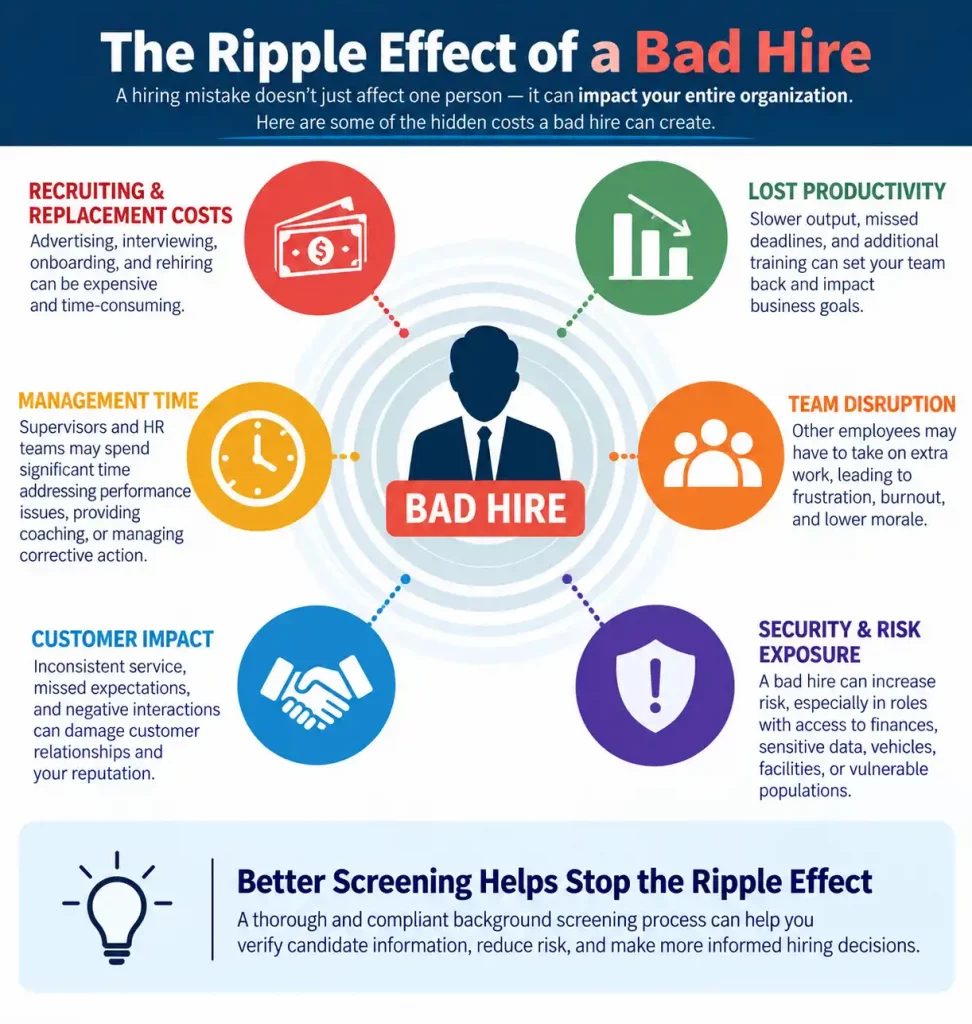
When a new employee does not work out, employers naturally think about the direct expenses involved in recruiting, onboarding, and training that individual. If the employee leaves or must be replaced, the organization may have to repeat the entire process, creating additional costs and taking valuable time away from managers and HR teams.
The less visible consequences can be equally significant. Other employees may have to take on additional responsibilities, deadlines can be missed, and managers may spend considerable time addressing performance or conduct concerns. In customer-facing positions, a poor fit can also affect service quality and client relationships. For positions involving access to company finances, confidential information, vehicles, facilities, or vulnerable populations, the potential consequences can extend into areas of security, safety, and organizational risk.
Candidate Information Should Be Verified, Not Assumed
Applications and resumes provide valuable information, but employers should have appropriate processes for verifying details that are important to a position. Discrepancies can occur in employment dates, job titles, educational credentials, professional qualifications, and other information presented during the hiring process. Some differences may have innocent explanations, while others may require additional review.
An effective screening program gives employers a structured way to confirm relevant information rather than relying solely on what appears on an application. Depending on the responsibilities of the position and applicable laws, screening may include identity verification, employment and education verification, criminal record searches, motor vehicle records, professional license verification, drug screening, or other job-related checks. The purpose is not to search for reasons to eliminate candidates, but to provide reliable information that can support a fair and informed decision.
Better Screening Starts With Understanding the Position
A common mistake is treating every position as though it carries the same level and type of risk. Screening is generally more effective when employers first consider the responsibilities associated with a particular role and then determine which checks are relevant to those responsibilities.
For example, a position that requires driving on behalf of the company may warrant a motor vehicle record search, while a role requiring a particular degree or professional license may call for direct verification of those credentials. Positions involving financial responsibilities or access to sensitive information may require different screening considerations. Taking a position-specific approach can help organizations build a more meaningful screening program while avoiding unnecessary checks that have little connection to the job.
Compliance Is an Essential Part of the Process
Obtaining background information is only one part of an effective screening program. Employers must also consider how that information is requested, evaluated, documented, and used when making employment decisions.
In the United States, employers that obtain background reports from consumer reporting agencies for employment purposes have responsibilities under the Fair Credit Reporting Act (FCRA). Depending on the circumstances, these can include disclosure and authorization requirements as well as specific procedures when information in a background report may contribute to an adverse employment decision. State and local laws can impose additional requirements or restrictions, particularly regarding criminal-history inquiries and how certain records may be considered.
Because requirements can vary by jurisdiction, employers benefit from having clearly defined screening policies and consistent procedures. Working with an experienced screening provider and qualified legal counsel when appropriate can help organizations understand their responsibilities while maintaining an efficient hiring process.
Screening Can Continue to Matter After Hiring
Organizations often think of background screening as something that happens only before an employee’s first day, but responsibilities can change significantly over the course of employment. An employee may be promoted, begin handling company funds, receive access to sensitive systems, start driving a company vehicle, or move into a role with responsibilities that were not part of the original position.
Depending on applicable laws, organizational policies, and the nature of the employee’s responsibilities, employers may consider whether periodic or post-employment screening is appropriate for certain positions. Any ongoing screening program should have a legitimate business purpose and be implemented consistently and in accordance with applicable requirements. The objective is to ensure that risk-management practices continue to reflect the responsibilities associated with a person’s current role.
Stronger Screening Supports Better-Informed Decisions
No background check can predict exactly how someone will perform after being hired, and screening should never be presented as a guarantee against future misconduct or performance problems. What a well-designed screening program can do is reduce avoidable uncertainty by helping employers confirm information that is relevant to the hiring decision.
When screening criteria are established in advance, connected to legitimate job requirements, and applied consistently, hiring teams have a stronger foundation for evaluating candidates. This approach can help protect employees, customers, company assets, sensitive information, and the reputation an organization has worked hard to build while supporting a more disciplined hiring process.
Make the Investment Before the Risk Becomes a Problem
The best time to identify a preventable hiring concern is before an individual is placed in a position of trust. Employers should consider whether they are adequately verifying candidate identity, confirming the qualifications and experience that matter for each position, and following consistent procedures when obtaining and evaluating background information. If there are gaps in any of these areas, reviewing the organization’s screening program can be an important risk-management step.
At Private Eyes, we help employers strengthen their hiring processes through background screening, identity verification, employment and education verification, drug screening, and other employment screening solutions. Our goal is to provide organizations with reliable information and efficient screening support so they can approach important hiring decisions with greater confidence.
A background check should be more than a box on a hiring checklist. When it is thoughtfully designed and properly implemented, it becomes part of a broader strategy for protecting the organization, supporting its workforce, and making informed decisions about the people being placed in positions of trust.
Key Takeaways
- A bad hire can create costs beyond recruiting and salary, including lost productivity, management time, team disruption, and reputational risk.
- Background screening helps employers verify candidate information and identify relevant discrepancies before making hiring decisions.
- Screening should be tailored to the responsibilities and risk level of each position rather than using the same checks for every role.
- Employers should maintain consistent, compliant screening procedures that account for applicable federal, state, and local requirements.
- A well-designed screening program can reduce avoidable hiring risk and support more informed employment decisions.
Have questions? Speak to a Private Eyes expert for more information.