


Credit Background Checks for Lenders: Reduce Risk and Make Smarter Lending Decisions
In today’s lending environment, financial institutions must balance fast loan approvals with fraud prevention, regulatory compliance, and financial risk management. Whether processing mortgages, auto loans, personal loans, or commercial financing, reliable borrower information is essential.
Credit background checks help lenders evaluate financial history, identify potential risks, and make informed decisions. When combined with identity and income verification, they also strengthen fraud prevention and underwriting efficiency.
What Are Credit Background Checks for Lenders?
A credit background check reviews a borrower’s credit history to assess creditworthiness and financial risk. Credit reports typically include payment history, outstanding debts, credit utilization, collections, bankruptcies, and recent inquiries.
This information helps lenders understand borrowing behavior, evaluate repayment risk, and identify financial inconsistencies requiring further review.
The Consumer Financial Protection Bureau’s credit reporting resources explain how credit reports work and their role in lending decisions.
Why Credit Background Checks Matter for Lenders
Reducing Financial Risk
Credit background checks help lenders evaluate how applicants have managed financial obligations. Payment history, outstanding balances, and delinquent accounts provide insight into repayment patterns and potential lending risks.
Although credit history cannot guarantee future performance, it supports consistent underwriting and better-informed credit decisions.
Identifying Fraud and Application Inconsistencies
Identity theft, synthetic identities, and inaccurate application information can expose lenders to financial losses. Credit checks may reveal suspicious activity or discrepancies that warrant additional investigation.
Combining credit screening with identity verification and Social Security number matching strengthens fraud prevention. The Social Security Administration’s electronic Consent Based Social Security Number Verification service allows eligible organizations to verify identifying information with appropriate consent.
Improving Underwriting Efficiency
Delays in verifying borrower information can slow loan approvals and increase operational costs. A structured credit screening process helps lenders identify concerns earlier and request necessary documentation before applications reach later underwriting stages.
Integrating credit screening with other verification services can streamline workflows, reduce manual reviews, and support faster lending decisions.
Credit Background Checks and Regulatory Compliance
Lenders must conduct credit background checks in accordance with applicable federal and state laws. The Fair Credit Reporting Act (FCRA) establishes requirements for obtaining and using consumer reports, including permissible purposes and adverse action notifications.
The Equal Credit Opportunity Act (ECOA) and Regulation B also establish protections against unlawful credit discrimination and requirements for certain lending decisions.
Maintaining clear screening procedures, protecting borrower information, and consistently applying underwriting standards help lenders manage compliance risks.
Combining Credit Checks With Identity and Income Verification
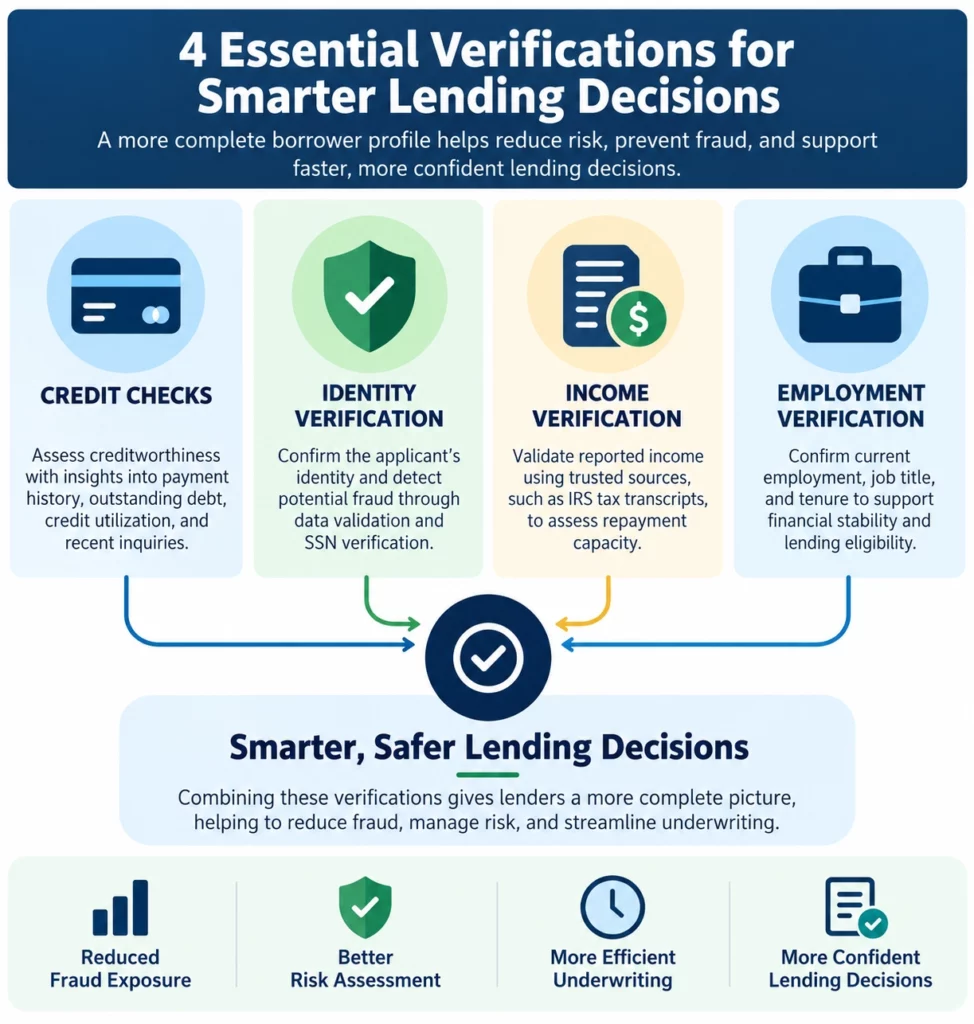
Credit reports reveal financial history but do not independently confirm an applicant’s identity, employment, or income. Lenders often need additional verification to establish a more complete borrower profile.
Identity verification helps detect impersonation, while employment and income verification support the evaluation of financial stability and repayment capacity.
For qualifying transactions, the IRS Income Verification Express Service (IVES) allows authorized participants to obtain tax transcripts with taxpayer consent, supporting the verification of reported income information.
Combining these services with credit screening helps lenders identify discrepancies, reduce fraud exposure, and make more confident underwriting decisions.
The Private Eyes Lenders Solutions service provides information about verification solutions that can complement lender screening processes.
Which Lenders Benefit From Credit Background Checks?
Credit background checks support risk management across several lending sectors, with screening requirements varying by loan type and applicable regulations.
Mortgage lenders use credit information to evaluate repayment history, existing debt, and overall creditworthiness alongside income and employment documentation.
Auto and personal loan providers rely on credit screening to assess repayment risk, determine financing terms, and process applications efficiently.
Banks and credit unions incorporate credit reports into lending programs for consumer loans, credit cards, and lines of credit.
Commercial lenders may review business credit information and, when appropriate and legally permissible, the personal credit histories of owners or guarantors.
Fintech lenders use authorized credit data within digital underwriting systems to support efficient application reviews and identify potential risks.
Building an Effective Credit Screening Strategy
A strong credit screening strategy begins with clear underwriting standards and verification procedures appropriate for each lending product.
Lenders should identify the information needed to assess creditworthiness, establish procedures for reviewing discrepancies, and use additional verification when necessary.
Regularly evaluating screening practices helps institutions address emerging fraud risks, maintain regulatory compliance, and improve operational efficiency.
Combining credit checks with identity, employment, and income verification creates a more comprehensive approach to borrower evaluation without introducing unnecessary complexity.
Strengthen Lending Decisions With Private Eyes Lenders Solutions
Accurate borrower information is essential to responsible lending. Credit background checks provide valuable insight into financial risk, while additional verification services help lenders address identity fraud, income discrepancies, and underwriting challenges.
Private Eyes understands the importance of reliable verification in today’s financial industry. Its Lenders Solutions offering helps lending professionals explore options for strengthening borrower screening and risk management.
Whether your institution specializes in mortgage lending, consumer financing, or commercial loans, an effective verification strategy supports more confident and efficient lending decisions.
Ready to strengthen your borrower verification process? Explore Private Eyes Lenders Solutions to learn about available services and connect with the team.
Key Takeaways
- Reduce Lending Risk: Credit background checks help lenders assess borrower creditworthiness and repayment history.
- Prevent Fraud: Combining credit screening with identity verification helps detect suspicious activity and application inconsistencies.
- Improve Loan Processing: Accurate borrower information supports faster, more efficient underwriting decisions.
- Maintain Compliance: Following FCRA requirements and applicable lending regulations helps protect lenders and borrowers.
- Strengthen Verification: Credit checks combined with income, employment, and identity verification provide a more complete borrower profile.
Have questions? Speak to a Private Eyes expert for more information.