


California CalVECHS Regulations 2026: What Employers Need to Know About the July 1 Changes
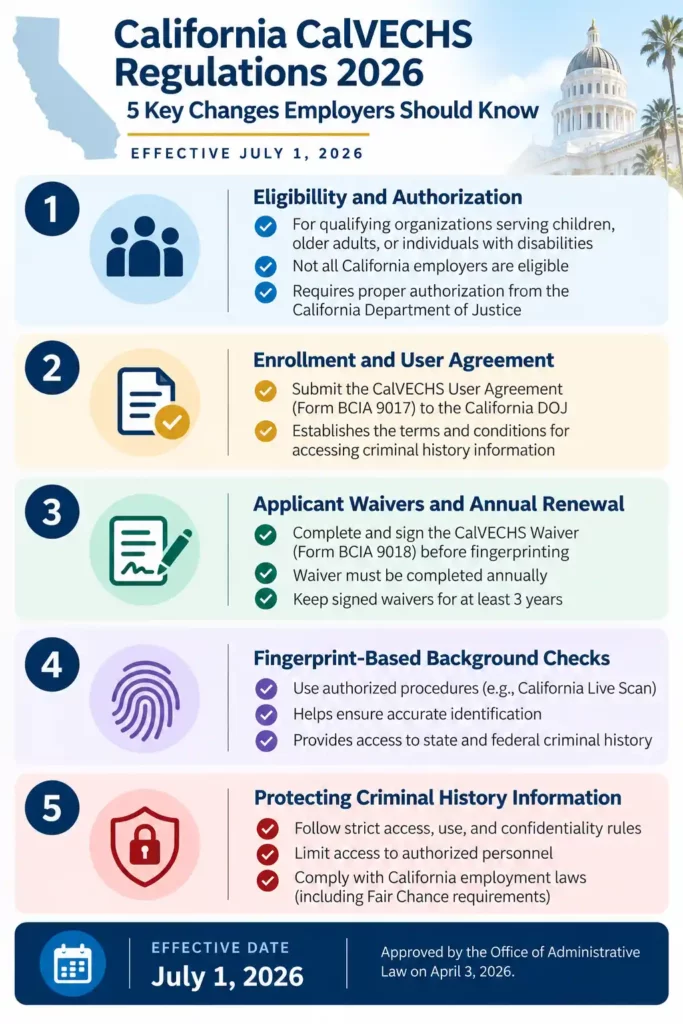
California’s new CalVECHS regulations, effective July 1, 2026, establish important requirements for eligible organizations conducting fingerprint-based criminal background checks. These regulations clarify how qualifying employers and volunteer organizations obtain authorization, collect applicant waivers, and manage access to sensitive criminal history information.
For organizations serving children, older adults, and individuals with disabilities, background screening plays an essential role in creating safer environments. However, conducting these checks also involves legal responsibilities that extend beyond simply reviewing an applicant’s criminal history.
Understanding the California Volunteer and Employee Criminal History Service (CalVECHS) regulations can help employers maintain compliant screening procedures, protect sensitive applicant information, and make more informed hiring decisions.
What Is the California CalVECHS Program?
The California Volunteer and Employee Criminal History Service (CalVECHS) Program provides a process through which qualifying organizations can obtain fingerprint-based criminal history information for eligible employees, volunteers, owners, and operators.
The program is designed primarily for organizations serving vulnerable populations, including children under 18, older adults, and individuals with disabilities. Depending on their activities and legal authorization, qualifying organizations may include certain nonprofit organizations, childcare providers, community programs, and other service providers.
Unlike traditional commercial background screening, CalVECHS involves access to criminal history information through authorized government channels. Participating organizations must meet eligibility requirements and follow procedures established by the California Department of Justice (DOJ).
According to the California Department of Justice’s official CalVECHS regulations, the Office of Administrative Law approved the regulations on April 3, 2026, and they became effective July 1, 2026. The regulations are incorporated into Title 11, Division 1, Chapter 4.5 of the California Code of Regulations.
These rules establish a more clearly defined regulatory framework for organizations seeking to use CalVECHS as part of their employee and volunteer screening processes.
What Changed Under the July 1, 2026 CalVECHS Regulations?
The July 1 regulations formalize several important aspects of the CalVECHS Program, including organizational eligibility, enrollment procedures, applicant authorization, fingerprint submissions, and the handling of criminal history information.
Although the regulations do not establish a universal fingerprinting requirement for California employers, they create specific compliance obligations for organizations authorized to participate in the program.
CalVECHS Eligibility and Organizational Authorization
One of the central requirements of the 2026 regulations concerns which organizations may participate in CalVECHS. The program is intended for qualifying human resource agencies and employers that provide services to children, older adults, or individuals with disabilities.
Organizations must have the appropriate legal authorization to obtain criminal history information through the program. Participation is not automatically available to every business or nonprofit organization that wishes to conduct fingerprint-based background checks.
The regulations also distinguish CalVECHS from other California background screening programs. Organizations already required to obtain fingerprint-based criminal history checks under certain separate statutory authorities may need to continue using those established procedures rather than enrolling through CalVECHS.
For employers, this distinction is particularly important because the legal authority to request criminal history information depends on the organization’s activities and the applicable screening laws. Before initiating fingerprint-based screening, organizations should understand whether CalVECHS is the appropriate program for their operations.
New Enrollment and User Agreement Requirements
The regulations also establish formal enrollment procedures for organizations seeking access to CalVECHS criminal history information.
Under Section 402 of the California Code of Regulations, authorized applicant agencies must submit the required CalVECHS User Agreement, Form BCIA 9017, to the California Department of Justice. This agreement establishes conditions governing participation in the program and access to criminal offender record information.
The California regulations governing CalVECHS enrollment explain the enrollment requirement and identify the applicable agreement.
For organizations that already conduct background checks, these procedures highlight an important distinction between general employment screening services and access to government-maintained criminal history records. An existing relationship with a background screening provider does not automatically establish authorization to participate in CalVECHS.
Employers should therefore ensure that their enrollment documentation, program authorization, and internal screening procedures align with the applicable DOJ requirements.
Applicant Waivers and Annual Authorization Requirements
Another significant provision of the 2026 regulations involves the authorization required from individuals undergoing fingerprint-based screening.
Under Section 405, covered individuals must complete and sign the CalVECHS Waiver Agreement for Release of Criminal Offender Record Information, Form BCIA 9018, before fingerprinting. The regulations also require the waiver to be completed annually thereafter.
Participating organizations must retain the agreement for at least three years or until a successful compliance audit has been assessed by the Department of Justice, as specified by the regulation.
These requirements reinforce the importance of maintaining accurate records throughout the screening process. Organizations need procedures that ensure the appropriate waiver is obtained, renewed when required, and securely maintained.
For human resources departments and volunteer coordinators, incorporating these requirements into existing onboarding procedures can help prevent documentation gaps and unnecessary delays.
Fingerprint-Based Criminal Background Check Procedures
Fingerprint-based screening is a central component of the CalVECHS Program. Unlike name-based background checks, fingerprint searches use biometric identifiers to help associate criminal history records with the correct individual.
This approach can be particularly valuable when screening individuals for positions involving direct interaction with vulnerable populations. Fingerprint-based checks may help distinguish applicants who share similar names and provide access to criminal history information available through authorized state and federal systems.
However, organizations must follow the fingerprint submission procedures permitted under their authorization, including applicable California Live Scan requirements or other approved submission methods.
The regulations do not mean that every employer in California must begin fingerprinting employees. Instead, they establish procedures for organizations participating in CalVECHS.
Employers should also recognize that fingerprint-based criminal history screening serves a different purpose from employment verification, education verification, and other forms of background screening. A fingerprint check may help identify relevant criminal history information, but it does not independently confirm an applicant’s professional qualifications or employment history.
Protecting Criminal History Information and Applicant Privacy
Access to criminal history information carries significant confidentiality and privacy responsibilities. Organizations participating in CalVECHS must comply with applicable restrictions governing how criminal offender record information is accessed, stored, used, and disclosed.
Because criminal history records contain sensitive personal information, employers should limit access to personnel who are authorized to review the information for legitimate screening purposes.
Organizations must also consider how criminal history information is used when making employment decisions. California has separate laws restricting the consideration of certain criminal records and requiring employers to follow applicable Fair Chance hiring procedures.
Receiving criminal history information through an authorized screening program does not automatically permit an employer to disqualify an applicant based on every record disclosed. Employment decisions must remain consistent with applicable legal requirements, including any position-specific restrictions or statutory disqualifications.
By maintaining appropriate confidentiality safeguards and carefully reviewing their decision-making procedures, organizations can reduce compliance risks while protecting applicant privacy.
Which California Employers Are Affected by CalVECHS Regulations?
The CalVECHS regulations primarily affect eligible organizations that participate in, or seek authorization to participate in, the program. These organizations generally serve children, older adults, or individuals with disabilities and have a qualifying legal basis for obtaining fingerprint-based criminal history information.
Depending on their operations and statutory authority, affected organizations may include certain nonprofit service providers, community organizations, childcare-related programs, and other entities serving vulnerable populations.
However, eligibility cannot be determined solely by an organization’s industry or the populations it serves. Some organizations operate under separate California statutes requiring fingerprint-based criminal history checks, and those requirements may continue to apply independently of CalVECHS.
The California Department of Justice’s updated CalVECHS regulatory explanation provides additional context regarding program eligibility and the distinction between applicant agency authorization and CalVECHS enrollment.
For employers operating across multiple locations or providing several types of services, reviewing the applicable screening authority for each role can help ensure that background checks are conducted through the correct program.
Why the 2026 CalVECHS Regulations Matter for Employers
The July 1, 2026 regulations highlight the importance of maintaining structured, legally compliant background screening procedures, particularly in organizations responsible for the safety and well-being of vulnerable individuals.
For employers, the implications go beyond fingerprint submissions. Participating organizations must understand their legal authorization, maintain required applicant documentation, safeguard criminal history information, and make employment decisions in accordance with applicable laws.
A screening process that lacks clear procedures can lead to administrative delays, inconsistent hiring decisions, and unnecessary compliance exposure. These challenges can also affect an organization’s reputation and the confidence of employees, volunteers, and the communities it serves.
Hiring decisions have financial implications as well. Recruiting, onboarding, training, and replacing employees can create substantial costs when a hiring decision does not work out. Understanding the financial and operational cost of a bad hire demonstrates why organizations benefit from reliable screening practices that balance thoroughness, efficiency, and legal compliance.
The CalVECHS regulations provide an opportunity for affected organizations to review their screening procedures and identify areas where stronger documentation, clearer responsibilities, or improved information security may be necessary.
How California Employers Can Prepare for CalVECHS Compliance
Preparing for CalVECHS compliance begins with understanding whether an organization qualifies for the program and whether it already has the appropriate California Department of Justice authorization.
Organizations seeking to participate should review the enrollment requirements and confirm that the necessary user agreements have been submitted. Employers operating under other fingerprinting statutes should determine whether those separate requirements continue to govern their screening processes.
Applicant documentation is another important consideration. Because CalVECHS requires the appropriate waiver before fingerprinting and annually thereafter, employers should establish procedures for collecting, tracking, renewing, and securely retaining these agreements.
Human resources teams and administrators responsible for background checks should also understand the organization’s authorized screening procedures. Training can help ensure that fingerprint submissions are handled correctly, sensitive information is accessed only by appropriate personnel, and criminal history records are evaluated consistently with applicable laws.
Employers should also review their relationships with background screening providers. Commercial employment background checks and government-authorized fingerprint-based criminal history searches are not interchangeable, and each may involve different legal requirements.
Organizations that address these considerations proactively can create more efficient screening workflows while reducing the likelihood of compliance issues.
How CalVECHS Fits Into a Comprehensive Background Screening Strategy
Although fingerprint-based criminal history checks can provide valuable information, they represent only one part of a comprehensive employment screening program.
Employers may also need to verify an applicant’s previous employment, educational credentials, professional licenses, identity, or other qualifications relevant to the position. The appropriate combination of screening services depends on the responsibilities associated with the role and the legal requirements governing the employer.
For example, fingerprint-based criminal history information does not establish whether an applicant earned a claimed degree or accurately represented previous employment experience. Similarly, a commercial background check cannot replace fingerprint-based screening when a specific law requires an authorized government criminal history search.
A well-designed screening strategy recognizes these differences and uses appropriate verification methods to support informed hiring decisions.
Private Eyes supports organizations through professional employment background check services that help employers evaluate applicant information and strengthen their hiring processes.
By combining appropriate screening methods with consistent compliance procedures, organizations can make better-informed employment decisions while respecting applicant rights and protecting sensitive information.
Disclaimer: This article is intended for general informational purposes and does not constitute legal advice. Employers should consult qualified legal counsel and the California Department of Justice regarding their specific CalVECHS obligations.
Key Takeaways
- Effective July 1, 2026: California’s CalVECHS regulations establish requirements for authorized fingerprint-based criminal background checks.
- Limited eligibility: The program applies to qualifying organizations serving children, older adults, and individuals with disabilities—not all California employers.
- Enrollment requirements: Participating organizations must obtain appropriate authorization and submit the required CalVECHS User Agreement (BCIA 9017).
- Applicant consent: Covered individuals must sign the CalVECHS Waiver (BCIA 9018) before fingerprinting and annually thereafter.
- Data protection: Employers must securely handle criminal history information and follow applicable privacy and employment laws.
- Compliance preparation: Organizations should review screening procedures, documentation, employee training, and authorization requirements.
Have questions? Speak to a Private Eyes expert for more information.